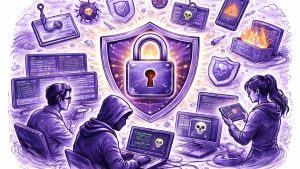


Phishing attacks continue to be a dominant and insidious cyber threat, evolving in sophistication and reach. These deceptive social engineering tactics exploit human trust and curiosity, manipulating individuals into unwittingly divulging sensitive personal or organizational information, or compromising their systems with malicious software. Understanding the mechanics of these attacks is the first step towards robust cyber defense.
The Evolving Landscape of Phishing Attacks
Phishing campaigns typically masquerade as legitimate communications, commonly appearing as emails, instant messages, or convincing fake websites. Attackers meticulously craft these deceptions to imitate trusted entities such as financial institutions, popular social media platforms, or governmental bodies. The primary objective is to instigate a sense of urgency, fear, or irresistible curiosity, compelling the recipient to act impulsively—often by clicking a weaponized link or downloading an infected attachment.
The threat landscape encompasses various specialized phishing techniques:
- Spear Phishing: This highly targeted approach involves meticulously researched attacks tailored to specific individuals or organizations. Attackers leverage personal information to increase the credibility of their malicious communications.
- Whaling: A more refined variant of spear phishing, whaling targets high-profile individuals within an organization, such as C-suite executives or senior management. The aim is often to gain access to sensitive corporate data or initiate large financial transfers.
- Smishing: Short for SMS phishing, this method utilizes text messages to deliver malicious links or induce victims to call fraudulent numbers.
- Vishing: Voice phishing, or vishing, involves attackers using deceptive phone calls to trick individuals into revealing personal or financial information, often impersonating bank representatives or technical support.
- Evil Twin Phishing: This advanced technique involves setting up a rogue Wi-Fi access point that mimics a legitimate one, intercepting user traffic and stealing credentials. Cyberwarzone has previously reported on the broader impact of such sophisticated attacks and the importance of network security and timely incident response.
The Psychological Warfare of Cybercrime
The relentless evolution of phishing tactics underscores a crucial aspect of modern cybercrime: psychological manipulation. Attackers are continually refining their methods, deploying hyper-realistic fake websites and sophisticated email templates that are increasingly difficult to distinguish from genuine communications. This escalating complexity makes it challenging for even vigilant users to identify and evade these traps, emphasizing the profound necessity for ongoing cybersecurity education, keen situational awareness, and the deployment of multi-layered security defenses within both personal and organizational digital ecosystems. For instance, the ongoing struggle against nationwide internet blackouts in regions like Iran demonstrates the broader impact of information control and the critical need for digital resilience.
Fortifying Your Digital Defenses Against Phishing
Protecting against the pervasive threat of phishing requires a proactive and multi-faceted approach. Individuals and organizations must adopt a robust security posture, integrating both technological safeguards and human vigilance:
- Cultivate Skepticism: Approach all unsolicited communications with a critical eye, particularly those demanding immediate action, requesting sensitive information, or containing unusual attachments.
- Independent Source Verification: Never rely on the contact information provided in a suspicious message. Instead, independently verify the sender’s legitimacy using official websites or known contact numbers.
- Scrutinize URLs and Email Headers: Before clicking any link, carefully inspect the full URL by hovering over it. Look for subtle misspellings, unusual domain extensions, or discrepancies. Pay attention to email headers for signs of spoofing.
- Implement Multi-Factor Authentication (MFA): Enabling MFA across all possible accounts adds a crucial layer of security, significantly hindering unauthorized access even if credentials are compromised.
- Maintain Software Hygiene: Regularly update operating systems, web browsers, security software, and all applications. Patches often address critical vulnerabilities that attackers exploit.
- Regular Security Training: Educate employees and users about the latest phishing techniques and best practices for identifying and reporting suspicious activity. This ongoing training is crucial in a landscape where state-backed cyber threats continue to escalate, highlighting the need for vigilance across all sectors.
By fostering a deep understanding of evolving phishing tactics and consistently applying robust cybersecurity practices, both individuals and organizations can significantly mitigate their risk exposure. Vigilance, education, and proactive defense are paramount in safeguarding our digital lives against these persistent threats.