

During the March 2026 Iran-related escalation, the South Pars gas field strike, Hormuz disruption fears, and evacuation warnings around Gulf energy sites reinforced a familiar reality: energy networks do not sit at the edge of geopolitical crises. They sit at the center of industrial continuity, public confidence, market pricing, and the wider systems that keep economies functioning.
Energy networks are attractive in cyberwarfare because they combine physical dependence with digital coordination. A disruption here can affect extraction, processing, transport, grid support, fuel availability, and price stability without requiring a direct strike on a military target. That makes the sector useful when attackers want pressure, visibility, and broad downstream effect.
This is why cyberwarfare keeps returning to energy infrastructure during periods of real-world tension. The issue is not only whether a refinery, gas field, pipeline operator, or grid-linked system can be hit. It is whether pressure on those systems can create wider industrial stress and political urgency across borders. The March 2026 alert environment made that logic visible again.
Why energy networks keep coming back as targets
Energy remains attractive in cyberwarfare because disruption here is immediate, visible, and economically amplifying. Problems in extraction, refining, transmission, or fuel movement do not stay inside one company. They ripple into industry, transport, household costs, and public perceptions of stability.
That wider effect is part of the appeal. Attackers do not need to damage a military system directly if they can instead create friction in the networks that power production, movement, and daily life. In a crisis, even limited interference with energy systems can produce outsized pressure because timing, continuity, and market sensitivity matter so much in this sector.
This fits the broader cyberwarfare pattern we have already been documenting. In our analysis of spillover, retaliation, and control in the Iran cyberwar, we showed how civilian-facing systems become vehicles for broader geopolitical pressure. Energy networks belong firmly in that category because their disruption can spread through multiple sectors at once.
What makes energy networks strategically useful in cyberwarfare
Energy targets are strategically useful because they connect infrastructure with markets and public consequence. Gas fields, refineries, power-related systems, storage facilities, and transport links do more than produce output. They influence industrial activity, consumer prices, national resilience, and perceptions of whether a crisis is becoming harder to contain. That means a cyber incident here can create political and economic pressure without needing to destroy physical assets directly.
There is also a multiplier effect. Energy systems sit underneath many other sectors, so disruption or even the fear of disruption can complicate transport, manufacturing, logistics, and household confidence elsewhere. That makes the impact larger than the initial point of compromise and gives attackers a way to create wider pressure through a relatively narrow intervention.
We have already seen the broader context for this in our reporting on evacuation warnings around Gulf energy sites after the South Pars strike and in our reporting on LNG buyers scrambling as Hormuz disruption hit Qatari supply routes. Those developments showed why energy continuity becomes strategically sensitive long before a direct cyber strike on energy control systems is publicly confirmed.
What defenders should prioritize in energy networks
For defenders, the priority is not only protecting public-facing portals or office systems. It is understanding which systems support production continuity, industrial control visibility, safety processes, supplier coordination, and recovery when normal operations are disrupted. Those are the layers where a contained cyber incident can become a wider industrial and market problem.
It also helps to think in terms of interdependence. Energy operators connect to logistics providers, industrial customers, grid-linked systems, traders, and governments that may already be under strain during a geopolitical crisis. That means resilience planning has to account for fallback operations, safety assurance, partner dependencies, and credible communication when core systems become unreliable.
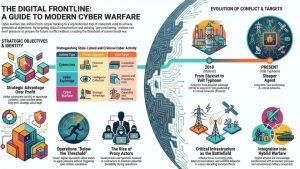
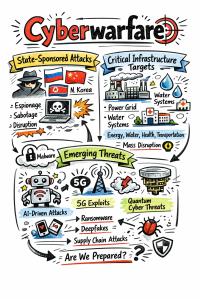
The broader lesson is simple: energy networks are not targeted only because they produce fuel or power. They are targeted because they transmit pressure across economies quickly. In cyberwarfare, that makes them recurring leverage points during periods of geopolitical tension.
Energy networks remain leverage points in cyberwarfare
The March 2026 South Pars and Hormuz-related energy disruptions reinforced a familiar reality: energy networks remain attractive because they combine industrial dependence, market sensitivity, and broad public consequence. Attackers do not need to strike a military system directly when disruption in energy can generate pressure across the wider civilian economy.
That is why this sector keeps reappearing in cyberwarfare. It offers leverage through continuity, pricing, and industrial dependence. For defenders, the lesson is to treat energy resilience as part of the broader conflict surface, not just as an operational or commodity-market issue.