
In 2010, security researchers uncovered a malware operation that changed the history of cyber conflict. MITRE ATT&CK still describes Stuxnet as the first publicly reported malware built specifically to target industrial control systems. In 2025, the U.S. House Homeland Security Committee used Stuxnet as the benchmark for discussing cyber threats to critical infrastructure. That comparison captures why the malware still matters today. Stuxnet did not steal credit cards or lock files for ransom. It sabotaged industrial machinery.
The malware targeted Iran’s Natanz uranium-enrichment facility. It compromised Windows systems, interacted with Siemens Step7 engineering software, and altered the logic running on programmable logic controllers that governed centrifuge operations. Analysts concluded that the code changed centrifuge speeds while hiding those changes from plant operators. That manipulation created physical stress inside a highly sensitive nuclear facility. Dragos still cites Stuxnet as the first confirmed example of malware tailored to an industrial control environment, and its 2025 ICS-malware research still places Stuxnet in the small group of malware families with genuine ICS capability.
Stuxnet matters because it pushed cyber operations beyond espionage and into strategic sabotage. It showed that malware could move from IT networks into industrial processes and create real-world effects without an airstrike or missile launch. That is why Stuxnet still sits at the center of any serious discussion of cyber warfare, doctrine, and the use of digital operations for state power.
How Stuxnet Was Discovered and What It Targeted
Stuxnet came to public attention in June 2010 after analysts at VirusBlokAda identified unusual malware infections on Windows machines in Iran. The deeper researchers looked, the stranger the operation became. MITRE ATT&CK notes that Stuxnet combined several advanced behaviors in a single platform, including multiple zero-day exploits, privilege escalation, rootkit functionality, and network infection routines. That alone made it exceptional. What made it historically important was its intended destination: industrial control systems tied to uranium enrichment.
The malware was built to look for Siemens Step7 engineering software connected to programmable logic controllers, or PLCs. Those controllers were used in environments that managed physical processes, not just office IT. Once the right configuration was found, Stuxnet modified PLC logic in order to interfere with centrifuge operations at Iran’s Natanz facility. The malware did not simply spread and destroy at random. It was engineered to activate under very specific technical conditions, which is one reason many analysts treated it from the beginning as a state-level operation rather than ordinary cybercrime.
That technical specificity is also why Stuxnet remains central to modern discussions of cyber conflict. It was an operation aimed at strategic infrastructure, designed to create physical consequences while remaining covert for as long as possible. In practical terms, it helped define the boundary between cyber espionage and cyber warfare used for strategic effect.
Why Analysts Still Treat Stuxnet as a Turning Point
Fifteen years later, Stuxnet is still used as the benchmark for industrial cyber sabotage. A July 2025 U.S. House Homeland Security Committee hearing explicitly framed Stuxnet as the world’s first digital weapon and used its anniversary to examine how threats to critical infrastructure had evolved since 2010. That is notable because it shows Stuxnet is not just remembered as a famous old incident. It is still being used by policymakers as the reference point for understanding modern threats to operational technology, critical infrastructure resilience, and cyber-physical risk.
The same pattern appears in current industrial-security research. In a 2025 white paper on credible ICS malware, Dragos places Stuxnet in a very small class of malware families with true ICS-specific capability. That matters because much malware reaches industrial environments without being able to manipulate physical processes. Stuxnet was different: it was purpose-built to interact with engineering workstations and PLC logic in a way that could alter the behavior of machinery itself.
Stuxnet therefore changed two debates at once. Technically, it proved that malware could cross from Windows systems into industrial processes and produce physical damage. Strategically, it proved that states could use code to degrade an adversary’s sensitive infrastructure without launching a conventional strike. That combination is why Stuxnet still anchors discussions about cyber weapons, escalation, and the militarization of cyberspace.
What Made Stuxnet Technically Different
Stuxnet did not behave like ordinary malware. According to MITRE ATT&CK, it used multiple zero-day vulnerabilities, local privilege-escalation techniques, rootkit functionality, and peer-to-peer propagation routines. Those capabilities mattered because they helped the malware move through Windows environments while remaining difficult to detect. But the real innovation was what happened after the initial compromise.
Once Stuxnet found Siemens Step7 engineering software, it looked for very specific PLC configurations associated with centrifuge control. It then modified controller logic while feeding false process data back to operators, effectively creating a deception layer around the sabotage itself. That distinction is critical. Many malware families can disrupt Windows hosts. Far fewer can interact with industrial processes in a way that changes the physical behavior of machines.
Modern industrial-security guidance still uses Stuxnet to explain why OT environments require different defensive assumptions than enterprise IT. CISA’s guidance on insecure-by-design ICS/OT architecture notes that Stuxnet changed how defenders thought about segmentation because the attack demonstrated that malware introduced internally could move from Windows systems toward operational technology. The lesson was not just that air gaps could fail. It was that once an adversary reached the engineering layer, cyber operations could begin to manipulate physical processes rather than merely steal data.
That is why Stuxnet remains a defining cyber-physical case study. It proved that the path from USB infection to PLC logic manipulation was not theoretical. It was operationally achievable, and it set the template for later concern about ICS-tailored malware, from Industroyer to Triton and beyond.
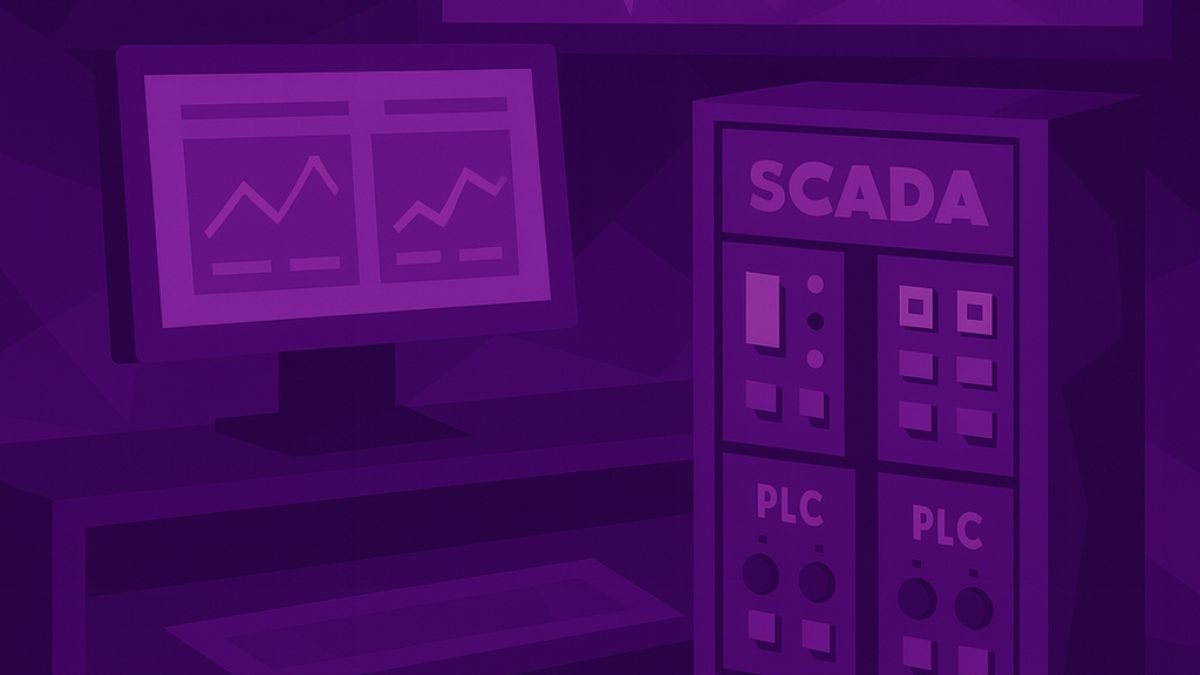
The precision of the payload is what separates Stuxnet from ordinary destructive malware. According to the Institute for Science and International Security, the malware did not merely look for Siemens software in the abstract. It checked for very specific frequency-converter conditions associated with high-speed centrifuge operation and for drives linked to Vacon of Finland and Fararo Paya of Iran. That level of targeting strongly reinforced the assessment that the code was built around Iran’s uranium-enrichment process rather than general industrial disruption.
The malware’s abuse of trust mechanisms was just as notable. Symantec’s technical analysis found that Stuxnet used stolen digital certificates from Realtek and JMicron to sign malicious drivers, helping them appear legitimate on Windows systems. Combined with multiple zero-day exploits and its PLC-specific logic manipulation, that made Stuxnet not just a worm with an industrial target but a carefully engineered intrusion platform designed to move from infection to covert process manipulation.
Who Built Stuxnet and Why Attribution Matters
No government has publicly claimed Stuxnet. Even so, major investigative reporting has long linked the operation to a joint U.S.-Israeli effort often called Operation Olympic Games. A 2019 New York Times reconstruction connected the malware to years of covert efforts to slow Iran’s nuclear program. A 2025 scholarly reassessment reached a similar conclusion and described Stuxnet as a clear example of cyber sabotage used as secret statecraft. That point matters. Stuxnet did not aim to steal data or cause brief disruption. It aimed to delay a strategic nuclear program.
Attribution shapes how analysts understand the malware. If they treat Stuxnet as unusually advanced code, they miss the bigger story. The operation aligned technical effects with geopolitical goals. It hit a strategic facility, used deep knowledge of industrial processes, and appears to have supported a broader campaign to impose costs without an overt military strike.
How Stuxnet Changed Cyber Warfare
Stuxnet changed both policy debates and defensive planning. It forced governments and industrial operators to accept that malware could manipulate real-world processes inside critical infrastructure. Since 2010, agencies, utilities, and security vendors have adjusted how they think about segmentation, engineering-workstation security, removable-media risk, and OT monitoring. The House Homeland Security Committee’s 2025 review of threats to critical infrastructure since Stuxnet shows that policymakers still use the operation as the reference point for cyber-physical sabotage.
Stuxnet also changed how analysts draw the line between espionage and warfare. Cyber espionage seeks access and information. Stuxnet used access to create physical effects. That difference places it in the same broader conversation as later infrastructure-focused operations such as Industroyer and Triton, even though the tools and targets differed. Stuxnet showed that cyber operators could quietly prepare, reach, and manipulate industrial systems in support of strategic goals.
The Operational Timeline
The timeline adds another important layer. MITRE ATT&CK notes that some Stuxnet components were already in use by November 2008. That means the operation began well before the public discovered it in 2010. The gap shows how cyber sabotage campaigns can stay hidden while operators refine access, tune payloads, and wait for the right moment. Stuxnet did not appear overnight. Its operators built and deployed it over time as part of a longer covert campaign.
That timeline also helps explain why so many analysts connect Stuxnet to reported U.S.-Israeli covert action. Public reporting and later scholarship describe the operation as a model case of cyber sabotage used to delay a strategic program without a visible military strike. From either a technical or geopolitical perspective, the same conclusion emerges: Stuxnet was not a one-off hack. It was a carefully prepared campaign that joined intelligence, malware engineering, industrial-process knowledge, and geopolitical intent.
Stuxnet’s Legacy for Defenders
Stuxnet remains more than a historical case study. It still warns defenders about how attackers can move from IT systems into physical processes. Modern OT and ICS guidance still reflects the lessons it exposed. Removable media can defeat assumed isolation. Windows engineering workstations can become a bridge into operational technology. Process visibility matters as much as host visibility when attackers aim to change physical outcomes. Current research from Dragos and operational guidance from CISA both reflect that reality.
Its relevance also reaches into current policy debates. On July 22, 2025, the U.S. House Homeland Security Committee held a hearing titled “Fully Operational: Stuxnet 15 Years Later and the Evolution of Cyber Threats to Critical Infrastructure”. That title says a lot. Fifteen years after public discovery, Stuxnet still serves as the reference case for understanding how cyber operations can create critical-infrastructure risk and physical-world effects.
That legacy explains why Stuxnet still deserves standalone study. It was not just the first famous cyber weapon. It forced the security community to accept that cyber conflict could produce real-world destruction and serve as a tool of state power.
The Researchers Who Uncovered Stuxnet
Stuxnet became a major story because researchers reconstructed it piece by piece. No single government disclosure revealed the full operation. Security teams, industrial-control specialists, and nuclear analysts built the picture over time. The first public discovery came in June 2010, when Sergey Ulasen at VirusBlokAda identified unusual malware on Windows systems in Iran. His team quickly realized they were not looking at an ordinary infection.
Other researchers then pushed the investigation forward. Symantec researchers Nicolas Falliere, Liam O Murchu, and Eric Chien carried out major reverse-engineering work. Industrial-security specialist Ralph Langner helped show that the malware did more than infect systems. It aimed to sabotage a physical industrial process.
The Companies and Software in the Malware Trail
The company names inside the Stuxnet story reveal how specific the operation was. The malware targeted Windows systems running Siemens Step7 engineering software. It then altered logic on Siemens programmable logic controllers. According to MITRE ATT&CK, that ICS-specific targeting is why analysts still describe Stuxnet as the first publicly reported malware built specifically to affect industrial control devices.
Symantec’s technical work also uncovered another important clue. Stuxnet used stolen digital certificates from Realtek and later JMicron to sign malicious drivers. That trick helped the malware appear legitimate inside Windows environments and delayed detection.
The Hardware Clues That Pointed to Natanz
The physical-process clues were even more revealing. Symantec and later nuclear analysts found that Stuxnet checked for frequency-converter drives from only two manufacturers: Vacon in Finland and Fararo Paya in Iran. The malware also looked for systems operating in a narrow high-frequency range that matched gas-centrifuge conditions far better than ordinary industrial machinery.
The Institute for Science and International Security argued that these technical details strongly pointed toward Iran’s uranium-enrichment infrastructure, especially Natanz. That fingerprint explains why Stuxnet remains such a defining case study. It was not broad cyber vandalism. It was a precision sabotage operation built around named researchers, named software, named hardware, named companies, and a very specific strategic target.