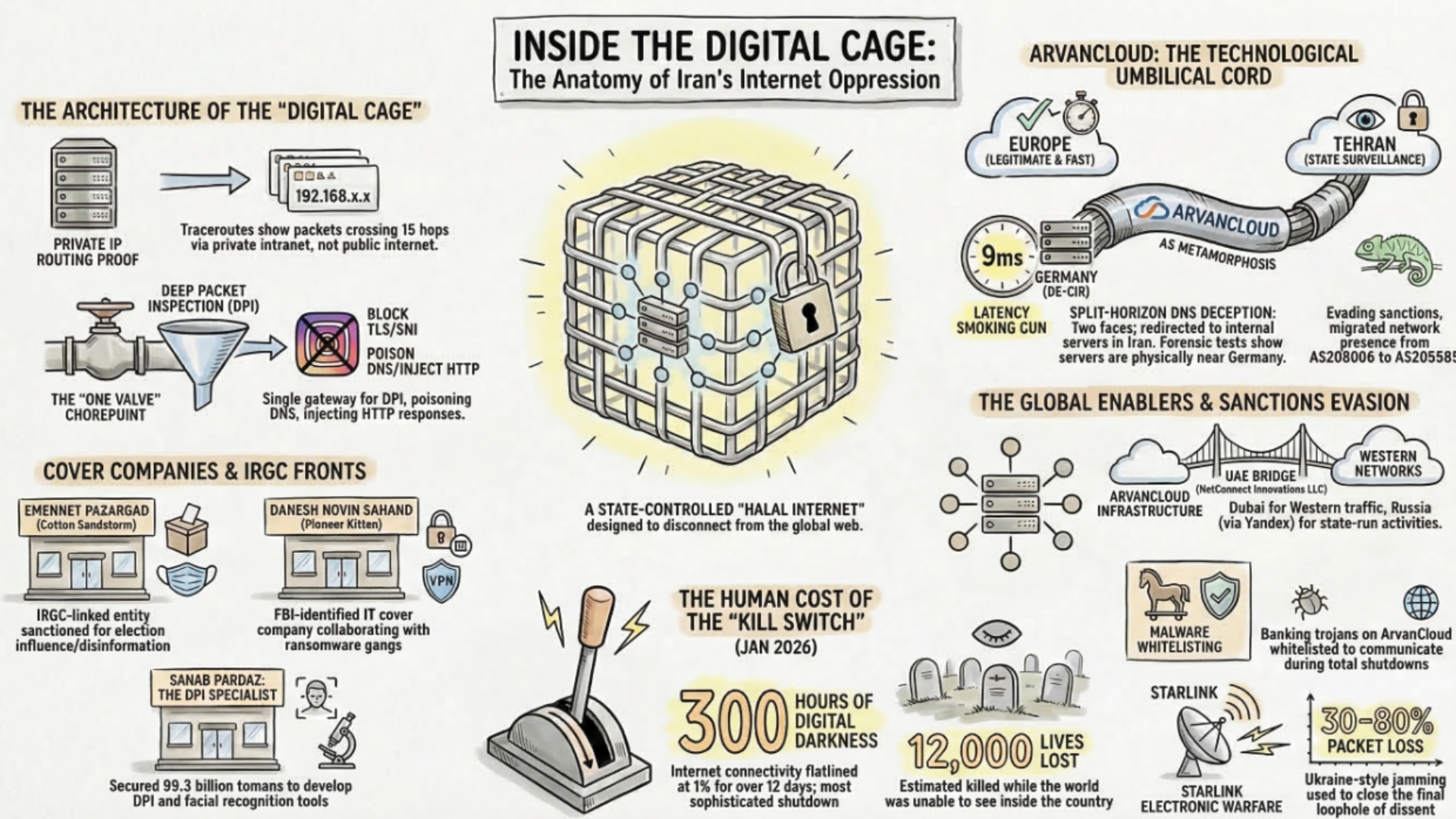

The Iranian government has implemented a near-total internet blackout, creating a two-tiered system of access that privileges regime loyalists while leaving the general population in a digital darkness. This move, ostensibly for national security, primarily serves to control information and suppress dissent, particularly during times of conflict.
A Pattern of Control
This is not the first time the Iranian government has used this tactic. During the 12-day war in June 2025, a similar shutdown was imposed for roughly half of the conflict’s duration. Each time, the official rationale was national security, but the result was the same: citizens cut off from the outside world, atrocities concealed, and the ties between Iranians inside the country and those beyond its borders severed. The government’s actions are a clear example of how cyberwarfare uses ambiguity and delayed attribution as pressure.
The Two-Tiered System
While the general population is left with a degraded domestic intranet, a select few are granted unfiltered internet access through so-called “white SIM cards.” These are distributed to journalists, members of parliament, and others attached to state institutions. This two-tiered system was exposed when X’s location display feature revealed a number of accounts posting from within Iran, without the use of circumvention tools. This blatant digital divide underscores the government’s strategy of using information as a tool of power. The ongoing US blockade of the Strait of Hormuz has only exacerbated the government’s tight grip on information.
Diaspora Resistance
In response to the blackouts, thousands of diaspora Iranians have been fighting back by sharing their bandwidth through volunteer proxy networks like Psiphon’s Conduit and the Tor Project’s Snowflake. These tools route encrypted traffic through volunteer devices, allowing users in Iran to circumvent government censorship. According to a report by TechRadar, Psiphon alone peaked at nearly 9.6 million daily Iranian users in early 2026. This demonstrates the lengths to which ordinary Iranians will go to stay connected to the world.
No Relief in Sight
Despite the efforts of the diaspora, the Iranian government’s control over the internet remains a powerful tool of repression. The recent ceasefire negotiations, which focused on missiles and nuclear facilities, failed to address the issue of internet access for the 90 million people of Iran. As long as the international community remains silent, the Iranian government will continue to use internet blackouts as a weapon against its own people.