
The U.S. Cybersecurity and Infrastructure Security Agency (CISA) has flagged a critical bug in BeyondTrust Remote Support and Privileged Remote Access that is already being leveraged in ransomware campaigns. The flaw, tracked as CVE-2026-1731 with a 9.9 CVSS score, allows unauthenticated attackers to run operating‑system commands on the appliance and has been weaponised to deploy web shells, backdoors and data‑stealing tools.

What operators are doing
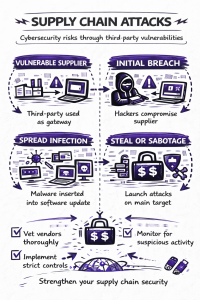
Palo Alto Networks Unit 42 researchers say they have observed the vulnerability exploited in the wild for network reconnaissance, account creation, command‑and‑control traffic, installation of remote‑management tools and lateral movement. Attackers have dropped multiple web shells (including a PHP backdoor and bash dropper), deployed malware such as VShell and Spark RAT, and used the foothold to compress and exfiltrate sensitive files, configuration data and full database dumps. Targets span financial services, legal firms, high‑tech, higher‑education, wholesale and retail, and healthcare organisations in the U.S., France, Germany, Australia and Canada.
Vendor disclosure and advisories
BeyondTrust published its own notice on 6 February; administrators should review the vendor advisory and related CISA advisory for the official patch and workarounds. BeyondTrust security advisories provide configuration details and hotfix links.
Thehackernews.com reported that ransomware gangs have incorporated the exploit into their toolkits, a claim that prompted CISA to add the vulnerability to its Known Exploited Vulnerabilities (KEV) catalog on 13 February 2026. Federal agencies are now required to remediate immediately.
Technical root cause
According to Unit 42, the bug stems from inadequate input sanitisation in a \”thin‑scc‑wrapper\” script exposed over a WebSocket interface. An attacker can inject arbitrary shell commands that execute with the privileges of the site user account; while not root, the account controls appliance configuration, managed sessions and network traffic, effectively giving the intruder full control.
Wider context
This incident follows a string of CISA advisories warning of exploited flaws, including a Linux kernel bug confirmed in ransomware attacks last October and a Belgian hospital outage earlier this month. Organisations that deploy BeyondTrust gear now face the same time‑sensitive remediation pressure.
As with earlier CISA alerts, defenders should treat the KEV listing as a high‑priority input to their vulnerability‑management process and assume exploitation is occurring at scale.
Mitigation
Immediate actions
- Apply the patch from BeyondTrust immediately; the vendor released fixes on 6 February 2026.
- If patching is not possible, isolate or disable remote support services until an update can be installed.
- Monitor for indicators such as unexpected WebSocket connections to the appliance or the presence of web shells and the VShell/Spark RAT binaries.
- Review logs for suspicious commands and search for signs of data staging or exfiltration.
The vulnerability underlines how remote‑management platforms continue to be a favourite initial access vector for ransomware groups. Administrators must treat any critical advisory involving these appliances as if it is already under active attack.
Earlier CISA confirmation of exploited vulnerabilities and a recent ransomware outage at a Belgian hospital show the agency’s steady pressure on exploited flaws.