
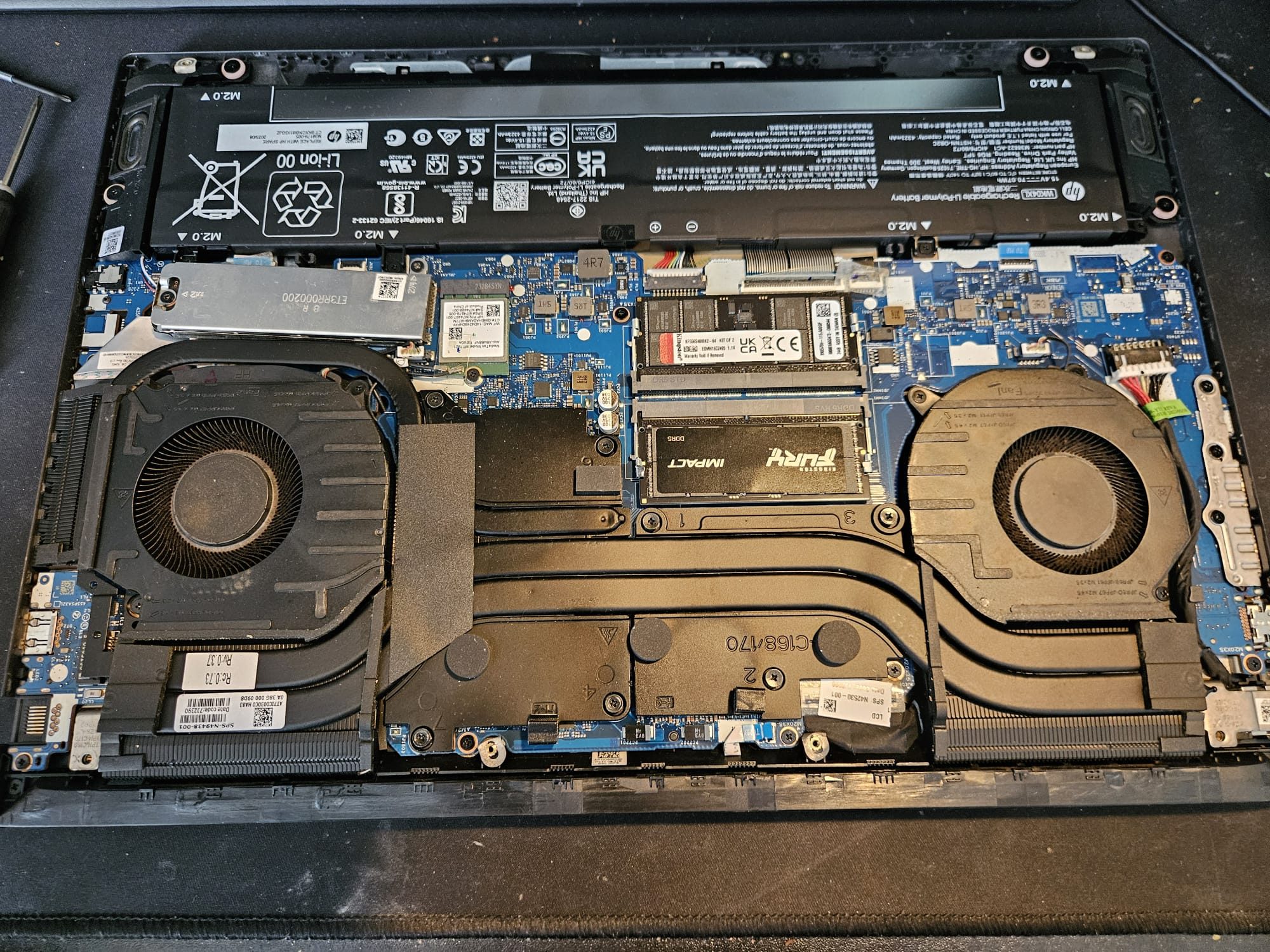

The HP Victus 16 Hall Effect sensor can fail under heat, causing false lid-closed detection that leads to black screens, flickering displays, sudden shutdowns, and power-on failures that software fixes cannot resolve.
A Complete Diagnostic & Permanent Repair Guide for Random Shutdowns
Audience note
This guide is written for HP Victus Laptop owners: people who care about hardware reliability, engineering failures, and long-term ownership — not surface-level “try updating BIOS” advice. This is a hardware-level postmortem and fix, not a workaround list.
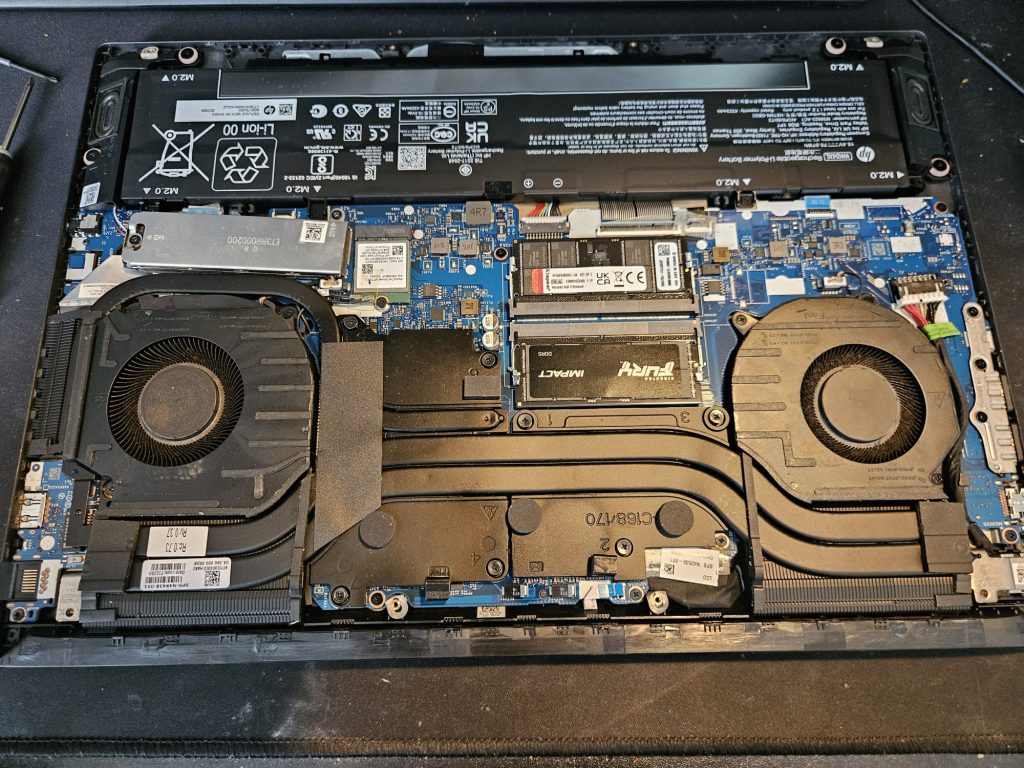
Laptop Shutting Off Randomly
Certain HP Victus 16 laptops (16-s0 and 16-r0 series) suffer from a repeatable hardware failure that causes:
- Random shutdowns
- Screen flickering followed by power loss
- Inability to power back on until cooled
- Progressive worsening over time
The root cause is not Windows, not drivers, not BIOS, and not the battery.
It is a Hall Effect lid sensor mounted directly beneath a CPU/GPU heatpipe — a placement error combined with an inappropriately rated component.
Once the sensor begins to thermally fail, the system falsely detects the lid as “closed” and forces sleep or shutdown at the firmware level.
This guide explains:
- Why this happens
- Why HP’s repair approach doesn’t fix it
- How to correctly diagnose it
- Three repair paths, including a permanent component-level solution
Affected Systems
- HP Victus 16-s0 series (AMD)
- HP Victus 16-r0 series (Intel)
The issue has been reported across multiple CPU/GPU configurations.
Failure Symptoms
A typical progression looks like this:
- Laptop operates normally for months
- Under gaming or moderate load, the screen flickers
- The system abruptly shuts down
- Power button appears nonfunctional
- Cooling the system allows a temporary restart
- Shutdowns occur faster and more frequently
- Eventually, the laptop fails shortly after POST
Hard resets may work briefly. Software changes do not stop the progression.
What the Hall Effect Sensor Does
A Hall Effect sensor detects magnetic fields. In modern laptops, it replaces mechanical lid switches.
In the Victus 16:
- A magnet in the lid aligns with the sensor
- Lid closed → magnetic field detected → system sleeps
- Lid open → magnetic field removed → system wakes
This behavior is enforced below the OS level. Once triggered, Windows cannot override it.
The Engineering Failure
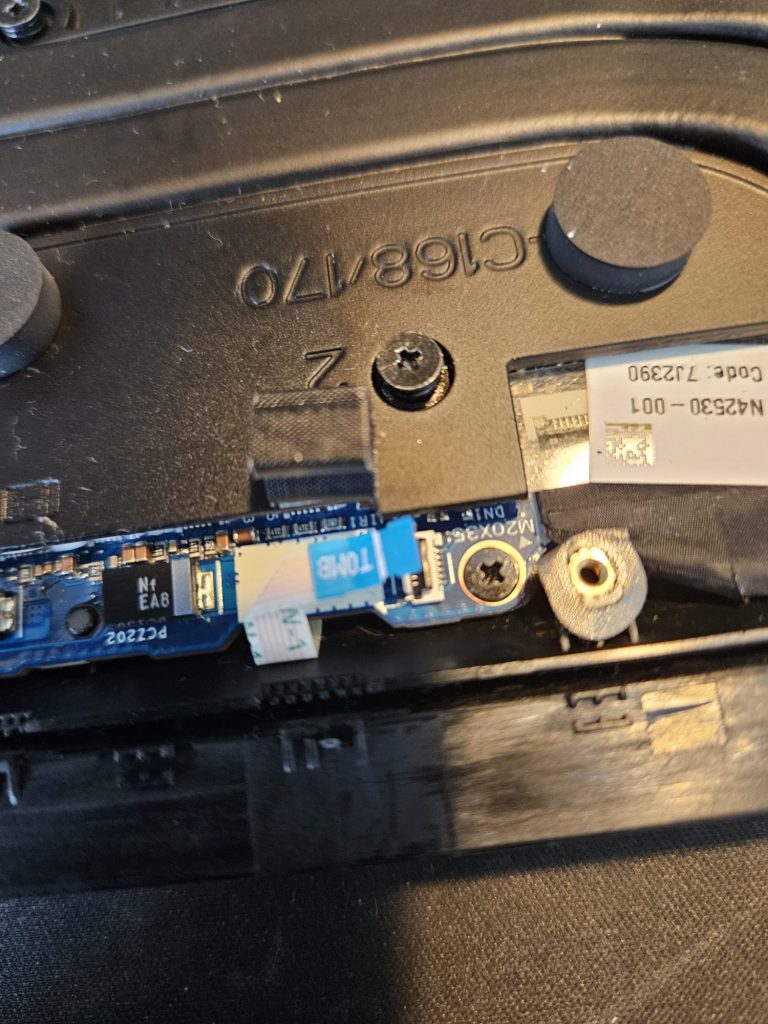
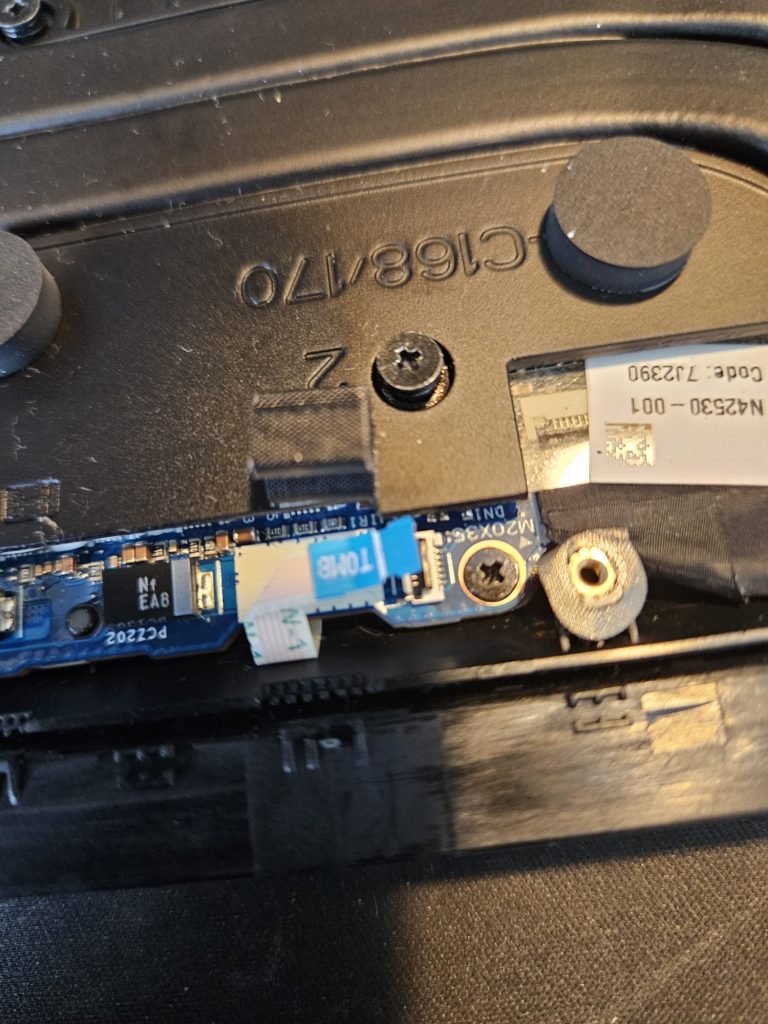
The Victus 16 Hall Effect sensor is mounted on a small IR board positioned:
- Directly beneath the CPU/GPU heatpipe
- In one of the hottest zones of the chassis
- Without thermal isolation
As internal temperatures rise, the sensor’s electrical characteristics drift. Once degradation begins, the sensor intermittently reports a false “lid closed” condition.
The system responds exactly as designed:
- Screen power is cut
- Sleep or shutdown is initiated
- Power button input is ignored (because the lid is assumed closed)
This is not a software bug — it is analog component failure.
Why OS and BIOS Changes Don’t Fix It
- Lid behavior settings in Windows are advisory only
- Firmware enforces lid-closed state independently
- BIOS updates cannot change sensor physics
- Linux may delay symptoms, but does not prevent failure
Once the sensor begins to degrade, the behavior is unavoidable without hardware intervention.
HP’s Official Repair: Why It Fails Long-Term
HP’s standard repair is to replace the IR board.
The problem:
- The replacement board uses the same sensor
- The thermal environment remains unchanged
- The failure typically returns
This is a non-corrective repair — it restores function but not reliability.
Repair Options
Option 1: Warranty Repair (Temporary)
- Only viable if under warranty
- Results in weeks without the laptop
- High likelihood of recurrence
This is a resale or short-term option, not a permanent fix.
Option 2: Disconnect the IR Board (Diagnostic / Workaround)
Disconnecting the IR board ribbon cable disables the Hall sensor entirely.
Result:
- Shutdowns stop
- Lid detection is disabled
Critical trade-off:
The IR board also contains an infrared thermal sensor used for safe thermal regulation.
When disconnected:
- The CPU/GPU loses reliable temperature input
- Firmware forces aggressive throttling
- Performance drops significantly
This confirms the diagnosis but turns the system into a low-power machine.
Option 3: Replace the Hall Effect Sensor (Permanent Fix)
This is the correct repair.
Requirements:
- SMD soldering capability
- Fine-tip iron
- Flux, solder braid, magnification
- Comfort working at component level
High-level process:
- Disassemble laptop per HP service manual
- Remove motherboard
- Extract IR board
- Desolder original Hall Effect sensor
- Install a higher-temperature-rated replacement
- Reassemble system
When done correctly:
- Lid detection works normally
- Thermal throttling remains functional
- Shutdown issue is permanently resolved
Why the Original Sensor Fails
Original component:
Toshiba TCS40DLR
Operating temperature: -40°C to 85°C
The datasheet explicitly states that sustained high-temperature operation — even within rated limits — significantly reduces reliability.
Placing this part under a heatpipe carrying CPU and GPU thermal load is a textbook misuse of the component.
The part itself costs ~$0.17.
The failure mode destroys the usability of a $1,000+ laptop.
Recommended Replacement Sensors
Automotive-grade, temperature-compensated Hall sensors with identical footprints and pinouts:
- Allegro A1126LLHLT-T — 150°C max (Manufacturer: Allegro MicroSystems)
- Diodes Inc AH3563Q-SA-7 — 150°C max (Manufacturer: Diodes Incorporated)
- TI TMAG5131C7DQDBZRQ1 — 125°C max (Manufacturer: Texas Instruments)
Recommended choice: Allegro A1126LLHLT-T
Cost: ~$1
Grade: Automotive, thermally robust, drop-in compatible
Power Rail Damage
In some heavily degraded systems, the motherboard’s Hall sensor power rail drops below spec (≈1.8V instead of 5V).
Advanced repair approach:
- Isolate the damaged supply trace
- Jumper VCC from the IR sensor rail
- Carefully insulate exposed copper
⚠️ This requires PCB trace-level repair skills and should not be attempted casually.
IR Board Reference Information
- IR board part numbers: N42551-001 / LS-M78IP
- Original Hall sensor package marking: LA8
Some third-party replacement boards relocate the sensor away from the heatpipe — a tacit admission that placement is the real issue.
Why This Matters
This is not an isolated defect.
It is a systemic design failure that has likely resulted in:
- Thousands of discarded laptops
- Massive unnecessary e-waste
- Users misled into motherboard replacements
- Repeat warranty failures
All caused by a sub-dollar component used outside its appropriate environment.
Final Verdict
If you own an HP Victus 16 and experience random shutdowns under load:
- You are not imagining it
- You did not configure something wrong
- Software will not save you
The fix is hardware, and when done correctly, it is permanent.
A $1 sensor restores full functionality — and exposes a costly engineering shortcut in the process.
References
