
A hacker operating under the alias 888 claims to have breached the European Space Agency (ESA) and stolen over 200 gigabytes of internal data on December 18, 2025, according to a post published on DarkForums on December 31. The alleged dataset contains private Bitbucket repositories, development documentation, infrastructure definitions, database connection credentials, and CI/CD pipeline configurations—material that directly reveals the operational architecture of one of the world’s most advanced space organizations. Screenshots provided show internal Jira instances detailing Security Operations Centre requirements, Bitbucket repositories tied to spacecraft systems and mission-critical orchestration services, configuration files containing server addresses ending in .esa.int, SMTP credentials, and technical deliverables bearing Thales Alenia Space and Airbus Defence and Space branding. If verified, this represents a complete infrastructure disclosure to threat actors, supply chain partners, and rival nation-states monitoring the dark web.
The breach occurred on December 18, 2025, according to the attacker’s timeline. 888 advertised the dataset for sale exclusively in Monero (XMR), a privacy-focused cryptocurrency, as a one-time package without specifying a price. The actor claims full exfiltration of private development repositories, internal technical documentation, infrastructure-as-code definitions (Terraform, deployment manifests), hardcoded credentials, API tokens, and source code for mission-critical systems.
What 888 claims to have accessed: Screenshots shared across hacking forums show evidence of breach depth. One image displays a `build.properties.dev` configuration file referencing PSA (Project Systems Administration) ingestion workflows, internal ESA hostnames, SMTP settings pointing to legitimate ESA mail infrastructure, and database connection strings with hardcoded credentials. Another reveals a Jira project interface with structured subsystem requirements for the Security Operations Centre (SOC) and Operations Control and Command System (OCCS), indicating active operational systems rather than archival databases. A third screenshot shows a Bitbucket instance with numerous repositories referenced by cryptic naming conventions tied to CI/CD pipelines, Docker image registries, orchestration services, monitoring components, data processing chains, and core infrastructure frameworks. Additional images display proprietary technical documentation marked confidential, including spacecraft reference frames, subsystem descriptions, and engineering diagrams stamped with partner organization logos.
ESA has not yet publicly confirmed the breach, though the agency acknowledged receipt of the claim on Twitter/X and stated it is investigating. The authenticity of the dataset has not been independently verified, though the granularity of internal configuration details, naming conventions, and document formatting make wholesale fabrication unlikely without genuine system access.
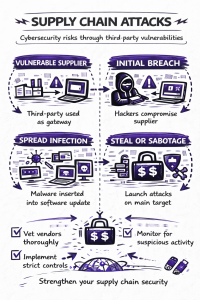
If the breach is authentic, the implications are strategic and immediate. The constellation of data alleged to be stolen—source code, CI/CD pipelines, database schemas, API tokens, infrastructure-as-code, and hardcoded credentials—constitutes a complete attack surface map. Threat actors possessing this material can: (1) identify pre-existing vulnerabilities in ESA systems and those of partner organizations using the same infrastructure; (2) pivot laterally through shared supplier networks (Thales Alenia Space, Airbus Defence and Space) to compromise related programs; (3) forge legitimate-looking deployment commands or updates using stolen CI/CD credentials; (4) access live operational data from systems managed by the compromised infrastructure; (5) impersonate ESA systems or partner platforms in follow-on social engineering campaigns targeting contractors.
Operational risk extends beyond ESA to European space and defense ecosystems. The agency operates as a coordinator and standard-setter for European space missions, partnering directly with national space agencies, commercial satellite operators, Earth observation programs, and communication systems used by European governments and NATO. Knowledge of ESA’s infrastructure, partner integrations, and system dependencies becomes intelligence for competitors and adversaries. China, Russia, and other nation-states actively monitor dark web disclosures of critical infrastructure data. Competitors in the commercial space sector may extract technical specifications or identify vulnerabilities before ESA teams can patch them.
Personnel and mission data remain at risk. Screenshots allegedly showing Jira instances and project documentation suggest exposure of development roadmaps, subsystem requirements, and potentially program timelines. If names or project codes correlate with classified or commercially sensitive missions, exposure becomes a counterintelligence concern. Employee information embedded in documentation or credential logs increases risk of targeted compromise and social engineering against ESA staff and contractors.
How attacker accessed ESA systems: The breach method remains unconfirmed, though common attack vectors against large organizations like ESA include: (1) credential theft targeting employee personal accounts or contractor access portals; (2) exploitation of unpatched infrastructure (web applications, VPN endpoints, identity providers); (3) compromise of a third-party service provider with legitimate access to ESA systems; (4) insider threat or disgruntled contractor with repository access. The fact that 888 claims access to Bitbucket (internal source code hosting), Jira (project management and requirements tracking), and infrastructure configuration files suggests either sustained privileged access within ESA networks or compromise of credential stores used to access multiple systems.
Exfiltration and marketplace posting pattern: The actor advertised the dataset on DarkForums, a known criminal marketplace, approximately 13 days after the alleged breach. This delay is consistent with manual data review, de-duplication, and marketplace posting procedures. The decision to sell exclusively in Monero (not Bitcoin or Ethereum) reflects the seller’s prioritization of transaction privacy over rapid sale, suggesting either patience or intent to avoid law enforcement analysis of transaction chains. One-time sale offers are common when sellers fear rapid discovery and want to liquidate stolen goods before organizations identify the breach and revoke credentials.
Technical signatures of authenticity: Screenshots provided display several markers consistent with genuine ESA systems rather than fabrication: (1) internal domain names ending in .esa.int rather than public ESA domains; (2) configuration file formats and variable naming conventions consistent with mature infrastructure-as-code practices; (3) project management requirements written in operational language (data reception, job execution, orchestration) reflecting real mission systems; (4) presence of partner organization branding (Thales, Airbus) consistent with ESA’s contracting model; (5) file naming conventions and directory hierarchies typical of large aerospace organizations. Wholesale fabrication of such granular detail without actual access would require months of reconnaissance and deep reverse-engineering knowledge of ESA architecture.
ESA’s infrastructure and access model: The European Space Agency operates a complex, multi-stakeholder environment connecting internal teams across satellite centers in Darmstadt (Germany), operations facilities in Madrid (Spain), and administrative offices in Paris (France). The organization manages mission-critical systems including Earth observation data processing, satellite tracking and command infrastructure, deep-space mission operations, and coordination platforms shared with dozens of European space agencies and private contractors. Infrastructure is typically managed through industry-standard tools: Bitbucket or GitHub for version control, Jira for project management, CI/CD pipelines (Jenkins, GitLab CI, or similar) for automated deployment, and configuration management systems storing credentials and infrastructure definitions. All such systems are logical targets for attackers seeking to compromise large technical organizations.
Threat actor 888 profile: The alias 888 has claimed responsibility for previous high-profile breaches including Samsung Medison (healthcare IT), Microsoft and Nokia employee data (corporate records), and other incidents. The actor demonstrates capability in obtaining and selling enterprise data, credential harvesting, and marketplace operations. Attribution to a specific threat group or nation-state remains unknown. Some security researchers have noted overlaps in operational procedures with Eastern European cybercriminal syndicates, though conclusive attribution is impossible from publicly available information. The fact that 888 seeks payment exclusively in Monero suggests either prior law enforcement contact or deliberate opsec discipline common among professional cyber criminals and state-sponsored actors.
Organizational vulnerability context: ESA, like most large government and quasi-government organizations, operates under budget constraints and legacy system dependencies. Modernizing infrastructure across dozens of partner organizations is slow. Remote workforce expansion post-2020 increased VPN and identity provider usage, expanding attack surfaces. Third-party contractor access to systems is difficult to audit centrally. These operational realities affect not just ESA but the entire European space and defense sector, making it a persistent target for espionage and opportunistic compromise.
Primary source: Hackread.com report published December 31, 2025, covering the 888 DarkForums post alleging the ESA breach. The article includes screenshots of alleged internal ESA systems and analysis of their technical authenticity.
Secondary confirmation: Security.nl Dutch-language coverage (December 31, 2025) reporting ESA’s acknowledgment of investigating the claim.
ESA official statement: The European Space Agency issued a brief statement via Twitter/X acknowledging receipt of breach claims and confirming initiation of investigation. No further details on breach scope, systems affected, or remediation steps have been publicly disclosed as of January 4, 2026.
Indicators of Compromise (IoCs) and defensive actions: Organizations concerned about ESA system compromise should monitor for: (1) unusual authentication attempts from new IP addresses or geographic locations to ESA-affiliated systems; (2) unexpected changes to system credentials, SSH keys, or API tokens; (3) anomalous data exfiltration from development systems or document repositories; (4) configuration changes to CI/CD pipelines; (5) unauthorized access to Bitbucket or Jira instances. Partner organizations using shared ESA infrastructure should rotate credentials, audit access logs for suspicious activity dating back to December 18, 2025, and notify ESA of any anomalies. The incident underscores the necessity of zero-trust security practices, credential rotation policies independent of ticketed incidents, and real-time monitoring for unusual data access patterns in infrastructure management systems. Organizations handling government or space-related contracts should expect elevated threat actor interest in this data and prepare for supply-chain-based follow-on attacks.